
Driving Lightness: How Molding Tech Reshapes Vehicle Bodies
High-Performance Injection Molded Automotive Components Engineered for Precision and Durability
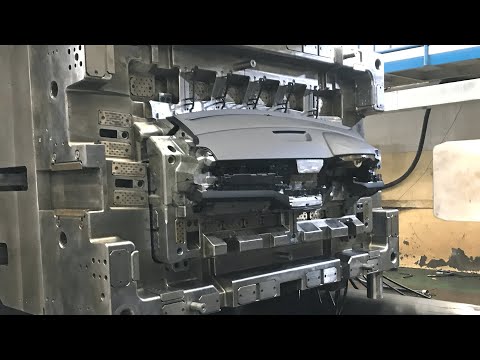
Injection molded automotive components are produced by forcing molten thermoplastic or thermosetting material into a precision‑machined steel mold under high pressure. This process yields parts with exceptional dimensional accuracy, complex geometries, and high repeatability, making it ideal for dashboards, bumpers, and under‑hood enclosures. The method enables rapid cycle times while minimizing post‑production waste, as each cavity forms a near‑net‑shape component that requires little to no secondary finishing. Engineers leverage this technology to integrate multiple functions—such as mounting bosses, clips, and sealing surfaces—directly into a single, lightweight part.
Driving Lightness: How Molding Tech Reshapes Vehicle Bodies
On the factory floor, a door panel emerges from the mold, its skeleton thinner by millimeters yet stronger than the stamped steel it replaces. This is the driving lightness reshaping vehicle bodies. By injecting molten polymer into precision cavities, engineers embed ribs and honeycombs that cut mass without sacrificing rigidity. Does driving lightness sacrifice crash safety? Not when molding tech allows tailored reinforcement: strategic thickness around impact points while shaving grams elsewhere. The driver feels it in quicker acceleration and fewer fuel stops, while the chassis flexes less thanks to optimized polymer distribution. Every gram shed by the molding machine becomes a tangible gain in handling and range, proving that lightness isn’t weakness—it’s design intelligence made real.

High-Strength Polymers Replacing Traditional Metal Parts
High-strength polymers are directly replacing traditional metal parts in injection-molded automotive components, reducing vehicle weight while maintaining structural integrity. These advanced polymer composites achieve comparable tensile strength to steel or aluminum through fiber reinforcement and optimized molecular orientation in the molding process. Practical applications include underhood brackets, engine mounts, and suspension links, where the polymer’s corrosion resistance and vibration damping provide additional benefits. The shift demands careful mold design to manage shrinkage and orientation for load-bearing performance.
- Reinforced polymers like long-fiber thermoplastics match steel stiffness at a fraction of the weight
- Injection molding enables complex geometries that consolidate multi-piece metal assemblies into single components
- Polymer parts eliminate secondary operations like welding or machining required for metal parts
Weight Reduction Strategies for Fuel Efficiency Gains

Replacing traditional metal parts with high-strength lightweight polymers directly reduces vehicle mass, lowering the energy required for acceleration and maintaining momentum. Structural foam molding creates rigid, hollow core components like door modules and cross-car beams, cutting weight by up to 30% while preserving impact strength. Gas-assisted injection molding further trims material in thick sections, eliminating solid cores in handles and brackets. Thinner wall sections, achieved through advanced flow simulation, remove excess plastic without compromising part integrity. Each gram saved reduces fuel consumption across the entire driving cycle.
Weight reduction via injection molding lowers fuel consumption by decreasing the inertial mass the engine must overcome, with every 10% weight saving yielding roughly 6-8% fuel efficiency gains.
Structural Foam Molding for Impact Absorption
Structural foam molding creates rigid, lightweight components with a cellular core and solid plastic injection molding automotive parts skin, specifically engineered for automotive impact absorption. This process injects a gas into the molten polymer, forming a foam that crumples under load to dissipate energy during a collision, unlike solid injection molding which may transfer force directly. The resulting parts, such as bumper beams and door panels, crush progressively to manage impact energy without shattering or increasing vehicle mass.
- Uses a nitrogen-based chemical blowing agent to create a micro-cellular structure inside the mold
- Reduces part weight by up to 20% compared to equivalent solid molded components
- Produces thicker, stiffer sections that resist bending forces before collapsing in a controlled manner
Inside the Cabin: Engineering Precision Interiors
Inside the Cabin: Engineering Precision Interiors demands that every injection molded automotive component—from the haptic-rich center console trim to the A-pillar clip—meets sub-millimeter tolerances to eliminate unsightly gaps. Tool designers must engineer the mold’s cooling channels to prevent warpage on large surfaces like door panel bases, while gate placement is critical for complex geometries such as integrated air vent vanes to avoid witness lines in high-visibility zones. A subtle sink mark on a glove box glovebox area, invisible to the eye, can still create an objectionable tactile feel during a quality audit. For interior cabin parts, selecting a resin with consistent shrinkage and low moisture absorption is non-negotiable to maintain fit and function over the vehicle’s life.
Dashboard Integration and Single-Shot Trim Panels
Dashboard integration leverages single-shot trim panels to merge multiple interior surfaces into one seamless, injection-molded structure. This eliminates secondary assembly steps, as the panel incorporates grain, soft-touch textures, and mounting points directly from the mold. A single cavity can produce a cohesive part that spans from the instrument cluster to the center stack, reducing weight and potential squeaks. How does single-shot tooling prevent warpage across large dashboard spans? It relies on precision-gated flow and balanced cooling channels within the mold to maintain uniform shrinkage, ensuring the part snaps into place without gaps or stress marks against the vehicle’s cross-car beam.
Soft-Touch Surfaces via Overmolding Techniques
Injection molding achieves soft-touch surfaces via overmolding techniques by bonding a thermoplastic elastomer (TPE) over a rigid thermoplastic substrate. The process requires precise control of melt temperatures and pressures to prevent delamination. A common logical sequence for implementation follows: first, the rigid base component is molded; second, the tool cavity shifts or rotates to accept the TPE shot; third, the molten elastomer bonds chemically and mechanically to the base as it cools. This creates a durable, low-gloss tactile interface on components like steering wheel grips and armrests, directly enhancing user handling comfort without adding assembly steps.
Acoustic Damping Through Multi-Layer Molded Inserts
Acoustic damping through multi-layer molded inserts achieves selective frequency attenuation within cabin trims by co-molding a rigid structural carrier with a viscoelastic dissipative layer and a mass-loaded septum. This sandwich construction converts vibrational energy into low-grade heat, targeting specific noise paths like drivetrain hum or wind flutter. The damping efficacy depends on precise layer thickness ratios, where a 2:1 viscoelastic-to-septum ratio typically maximizes loss factor for low-frequency resonance. Inserts are overmolded with decorative skins, maintaining aesthetic continuity while eliminating secondary foam pads.
Under the Hood: Thermal and Chemical Resistance
In the engine bay, injection molded components must withstand brutal thermal cycling and chemical assault. Thermal and chemical resistance dictates material choice; for instance, polyamide (nylon) with glass-fiber reinforcement handles under-hood temperatures exceeding 150°C, while connectors and hoses require resistance to hot oil, coolant, and fuel vapor.
Without this targeted resilience, parts like intake manifolds would degrade or crack under constant heat and solvent exposure, leading to premature failure.
The right polymer matrix ensures dimensional stability during thermal spikes and prevents chemical swelling or embrittlement, directly extending component lifespan in this hostile environment.
Engine Bay Components Withstanding High Temperatures
Engine bay components face extreme thermal stress, requiring injection molded resins engineered for sustained high-temperature exposure. Materials like PPA and PPS withstand continuous heat from turbochargers and exhaust manifolds, preventing warpage in connectors, sensor housings, and valve covers. High-temperature polymer selection is critical; these materials maintain dimensional stability and electrical insulation properties even under hoods exceeding 150°C. Without this thermal resistance, plastic components would soften, crack, or fail, leading to coolant leaks or electrical shorts. Q: What happens if an engine bay component exceeds its heat deflection temperature? A: The part deforms, losing seal integrity and risking catastrophic engine failure from fluid or air leaks.
Fluid-Handling Systems Molded for Leak Prevention
Critical automotive fluid-handling systems, such as coolant reservoirs and oil pans, are molded with advanced seal-integrity features to prevent leaks. Engineers design these components with precise gasket grooves and controlled shrinkage rates, ensuring a tight fit under thermal cycling. The use of glass-filled nylon or PPS creates a robust barrier against aggressive chemicals and high temperatures, maintaining dimensional stability. Molded-in baffles and threaded inserts further eliminate common leak paths, providing a homogeneous structure that outperforms multi-part assemblies. This molded leak prevention strategy directly reduces failure points in pumps and manifolds.
Battery Housings With Fire-Retardant Material Blends
Modern electric vehicle platforms depend on fire-retardant material blends for battery housings, which are injection molded using specialized thermoplastic compounds that self-extinguish upon exposure to flame. These blends typically incorporate halogen-free flame-retardant additives within glass-reinforced polyamides or polyphenylene sulfide, achieving UL94 V-0 ratings without compromising mechanical integrity. The critical balance lies in maintaining thermal conductivity for heat dissipation while preventing catastrophic cell-to-cell propagation during a thermal event. By selecting material blends with high Comparative Tracking Index (CTI) values, engineers ensure electrical insulation remains stable under high-voltage loads, directly reinforcing the housing’s role as a robust fire barrier within the vehicle structure.
Battery housings with fire-retardant material blends integrate injection-molded thermoplastics that halt flame spread and manage thermal runaway, directly isolating occupants from battery fires through self-extinguishing, high-CTI polymer chemistry.
Lighting the Way: Optical-Grade Lens Production
In a quiet automotive plant, the shift to optical-grade lens production for headlights meant mastering a glass-like clarity from molten resin. Each injection cycle demanded precise thermal control, as even a 2°C variance could scatter beam focus. The molds, polished to a mirror finish, now imprint complex fresnel patterns directly onto polycarbonate—no secondary coatings needed. Why is optical-grade production different from standard molding? Because here, the plastic itself becomes the lens, requiring perfectly isotropic flow to eliminate birefringence. Technicians watch shot-by-shot, ensuring no witness lines stray across the light path. The payoff arrives at night: a sharp, legal cutoff line projected onto the road, born from the discipline of every gate, vent, and hold phase in the injection process.
Polycarbonate Headlamp Lenses With UV Stabilization
Polycarbonate headlamp lenses with UV stabilization are engineered to resist photodegradation and yellowing from prolonged sun exposure. The UV stabilizer is integrated during injection molding, directly into the polycarbonate melt before optical-grade lens formation. This pre-compounded stabilization ensures the lens maintains light transmission and impact resistance over a vehicle’s lifespan. Without this additive, clarity diminishes within months. The molding process requires precise melt temperature control to preserve stabilizer efficacy and prevent optical distortion. UV-stabilized polycarbonate headlamp lenses are thus essential for long-term optical performance and safety in automotive lighting.
UV-stabilized polycarbonate headlamp lenses deliver sustained optical clarity and impact resistance by integrating stabilizers during injection molding, preventing UV-induced yellowing.
Complex Light Guide Geometries in Single Cavities
In injection molding for automotive lighting, squeezing complex light guide geometries into a single cavity is a neat trick. Instead of assembling multiple separate guides, single-cavity optical cores let you mold intricate curves and branching paths as one seamless part. This reduces assembly errors and keeps light transmission super consistent. The practical workflow usually goes like this:
- Design the core geometry to avoid sharp corners that scatter light.
- Polish the cavity steel to a mirror finish for minimal surface haze.
- Use a high-flow optical resin to fill every thin, twisted channel without voids.
- Adjust gate placement so molten plastic reaches all branches evenly.
It’s a crafty way to make headlight waveguides or DRLs that look and function like a single sculpted light pipe.
Sealed Connectors for Moisture-Proof Tail Light Units
Sealed connectors are the unsung heroes behind moisture-proof tail light units, using robust injection-molded housings and integrated rubber gaskets to block humidity and rain entirely. These connectors lock tightly against the lamp’s backplate, ensuring no water creeps into the lens cavity where it could fog optics or corrode wiring. The thermoplastic material is chosen for dimensional stability, so the seal stays intact across temperature swings. Integrated perimeter gaskets compress during assembly, creating a permanent barrier that outlasts the vehicle.
Why do sealed connectors fail in tail lights? Usually due to improper mating—if the connector isn’t fully seated, the gasket can’t compress evenly. Always listen for a click and verify the locking tab is flush against the housing.
Assembly Line Efficiency: Reducing Part Count and Labor
For injection molded automotive components, reducing part count and labor directly streamlines the assembly line by eliminating fasteners and secondary joining steps. A single, complex molded part can replace a multi-piece metal assembly, cutting manual handling time at the workstation. This design-for-assembly approach allows robots or workers to snap components together in one motion, rather than torquing bolts or welding brackets. The result is fewer jigs, shorter cycle times, and minimal rework from misaligned sub-assemblies. By consolidating functions into one mold—like integrating a clip, gusset, and sealing lip—you remove entire stations from the line, freeing labor for higher-value tasks and boosting overall throughput.
Integrating Clips and Fasteners Into One Mold Cycle
Integrating clips and fasteners into a single mold cycle for injection molded automotive components eliminates secondary assembly operations. By designing living hinges, snap-fits, or threaded inserts directly into the mold’s cavity, manufacturers produce a complete part with built-in attachment features. This approach reduces post-molding labor, as operators no longer manually install separate fasteners. It also improves dimensional consistency, since all features are formed simultaneously under controlled pressure and temperature. The result is a lower part count per assembly, fewer handling steps, and streamlined quality checks. This method is particularly effective for interior trim, underhood brackets, and panel connectors where traditional fasteners add weight and assembly time.
Integrating clips and fasteners into one mold cycle reduces parts, cuts labor, and ensures consistent single-shot fastener integration for automotive assemblies.
Color-Matched Surfaces Eliminating Secondary Painting
Color-matched surfaces eliminate secondary painting by integrating pigments directly into the resin during injection molding, producing a finished component with the specified OEM exterior or interior color straight from the tool. This process requires precise masterbatch formulation and temperature control to avoid color shift or streaking. The sequence for successful implementation involves:
- Selecting a UV-stable, colorant-compatible polymer grade.
- Compounding the exact RAL or Pantone-matched pigment into the melt.
- Validating final color consistency against a master plaque using a spectrophotometer.
Resulting parts are scratch-resistant and ready for assembly, removing an entire paint booth step. This method directly reduces labor hours, paint waste, and paint defect rework costs in automotive trim manufacturing.
Snap-Fit Bracket Designs for Robotic Installation
Snap-fit bracket designs for robotic installation eliminate fasteners and welding, enabling automated assembly lines to secure components in under two seconds per joint. These brackets use engineered cantilever hooks or annular rings that deflect during press-fit and lock upon seating, with chamfered lead-ins guiding robotic end-effectors without vision systems. Tolerances must balance snap-force (for retention) with insertion-force limits of typical six-axis robots (under 150 N) to prevent stalling.
Q: How do snap-fit brackets handle vibration in drivetrain mounts?
A: They integrate anti-rotation ribs and tapered catches that self-tighten under cyclic loads, tested to 50,000 thermal cycles at -40°C to 125°C without creep failure.
Surface Finish and Aesthetics: Beyond Bare Plastic
For automotive interiors, moving beyond bare plastic is about transforming a functional part into a tactile experience. Textured finishes, like leather grain or soft-touch coatings, hide fingerprints and reduce glare on dashboards, making the cabin feel premium. Glossy or metallic paints on trim pieces add visual depth, but require precise mold surface polishing to avoid orange peel.
The real trick is balancing durability with feel—a matte soft-touch that resists wear from sunscreen or hand oils is far better than a shiny panel that scratches.
Invisible weld lines and uniform gloss across complex curves are the mark of a quality mold surface, not just the plastic chemistry.
Class-A Paint-Ready Mold Textures
Class-A paint-ready mold textures eliminate secondary sanding or priming by imparting a micro-peak topography that anchors primer and paint directly onto the molded part surface. For injection molded automotive components, these textures achieve a gloss uniformity below 1.0 GU variation, critical for adjacent body panels. The tool steel must be laser-textured or chemically etched with a maximum Ra of 0.2 µm to prevent sink marks or orange peel after paint cure. Paint-ready mold texturing reduces cycle time by 12% versus post-mold finishing. A common oversight is that these textures cannot hide flow lines—gating and melt temperature must already be optimized.
Q: Can Class-A textures be re-polished or re-etched after tool wear?
A: Only if the original texture depth (typically 8–15 µm) allows removal of surface fatigue without exceeding geometric tolerances for the automotive component.
In-Mold Decoration for Wood or Carbon Fiber Looks
In-Mold Decoration (IMD) for automotive components achieves realistic wood or carbon fiber finishes by placing a printed film directly into the injection mold before plastic is shot. This embeds the grain or weave pattern beneath a durable, scratch-resistant surface, eliminating post-mold painting or wrapping. IMD for wood or carbon fiber looks offers exceptional detail reproduction, from open-pore wood textures to precise 3K twill weaves, while maintaining chemical resistance and UV stability. The key advantage is that the decorative layer is fully integrated with the substrate, preventing delamination or edge peeling over time. This process is ideal for interior trim, console panels, and steering wheel accents where lightweight, durable, premium aesthetics are required.
In-Mold Decoration for wood or carbon fiber looks provides integrated, durable trim with high-resolution patterns and zero post-processing.
Laser-Etched Grain Patterns Enhancing Grip Surfaces
Laser-etched grain patterns transform injection molded surfaces into tactile interfaces, delivering micro-textured grip enhancement without secondary overmolding. By ablating precise micro-craters and directional ridges into the tool cavity, the mold produces components with embedded friction zones that resist slipping even with oily fingers. This technique modifies only the surface’s topography, preserving the bulk polymer’s structural integrity and chemical resistance. The pattern’s depth and frequency are tuned to specific hand-contact points—steering wheel spokes, gearshift paddles, door pulls—ensuring consistent purchase across temperature extremes.
Laser etching embeds permanent, wear-resistant grain patterns directly into injection molded automotive parts, replacing glued-on grips with a molded-in solution that never peels or degrades.
Sustainability Cycles: Recycled Content and Bio-Resins
For injection molded automotive components, sustainability cycles hinge on two material strategies. Post-industrial recycled content, like regrind from bumper scrap, reduces virgin polymer use without sacrificing impact strength for interior trim. Bio-resins, derived from castor oil or corn, offer a renewable alternative for non-structural parts such as glove boxes, though they require careful moisture control during molding. Balancing recycled content with chemical compatibility ensures durable weld lines, while bio-resins must match thermal resistance for under-hood clips. This closed-loop approach directly cuts cradle-to-gate emissions for visible and hidden parts.
Post-Consumer Polypropylene in Interior Trim
When choosing post-consumer polypropylene for interior trim, you get parts like door panels and lower dash sections that feel solid but shave weight. The recycled pellets handle the injection molding process well, though you might notice slightly different flow rates than virgin resin. Color consistency is generally good, but textured surfaces are your friend—they hide the subtle speckling that can happen with recycled content. Just keep the mold temperature steady and you’ll avoid sink marks on those thin A/B pillar sections.
Natural-Fiber Reinforced Composites for Door Panels
Natural-fiber reinforced composites for door panels utilize materials like kenaf, hemp, or flax embedded in a bio-resin matrix, specifically tailored for injection molding processes. These formulations achieve a high stiffness-to-weight ratio, reducing overall part mass by up to 30% compared to conventional polypropylene. The fibers must be chemically treated to ensure proper wet-out within the mold cavity, preventing voids that compromise impact resistance. For door panels, natural-fiber reinforcement provides effective sound dampening without adding mass, while the bio-resin base allows for full compostability at end-of-life, provided no synthetic adhesives are used in the lamination layer.
- Requires precise fiber drying (below 2% moisture) to prevent steam defects during injection.
- Typical fiber loading in door panel composites ranges from 40% to 60% by weight.
- Melt flow must be optimized to avoid fiber breakage in complex panel geometries.
- Surface finish can be controlled via mold temperature, eliminating need for secondary painting.
Closed-Loop Scrap Reuse From Production Runs
During injection molding runs of automotive components, you can immediately regrind sprues, runners, and rejected parts, then feed that material back into the same press. This closed-loop scrap reuse minimizes raw material waste without altering the part’s formulation or performance. The key is perfect segregation—contamination from dirt or different polymers would compromise structural integrity. By adjusting process parameters like melt temperature and cycle time to account for the slightly reduced molecular weight of regrind, you maintain consistent dimensional tolerances and surface finish on parts like interior trim or underhood housings.
Closed-loop scrap reuse instantly recaptures production-run waste, regrinds it, and reintroduces it into the same injection molding process, preserving material integrity while reducing virgin resin consumption.
What Makes Injection Molded Parts Essential for Modern Vehicles
How These Components Improve Structural Integrity While Reducing Weight
Key Performance Characteristics That Plastic Molded Parts Deliver Under Hood
Comparing Material Options for Automotive Molded Components
Choosing Between Thermoplastics and Thermosets for Your Application
Which Fillers and Reinforcements Boost Durability in High-Heat Zones
Tips for Selecting the Right Molding Process for Car Parts
When to Use Insert Molding Versus Overmolding for Multi-Material Parts
How Tooling Design Affects Part Precision and Cycle Time
Common Quality Issues in Molded Auto Parts and How to Avoid Them
Preventing Warpage and Sink Marks in Large Interior Panels
Managing Flash and Short Shots in Complex Geometric Shapes
Designing Components for Efficient Assembly in Automotive Systems
Features That Enable Snap-Fits, Heat Staking, and Vibration Welding
Integrating Sealing and Gasket Functions Directly into Molded Parts
Cost-Saving Strategies Without Sacrificing Performance in Molded Parts
Using Multi-Cavity Molds to Reduce Per-Unit Expense
Optimizing Wall Thickness Uniformity to Minimize Material Waste
